5 Februari 2014
History
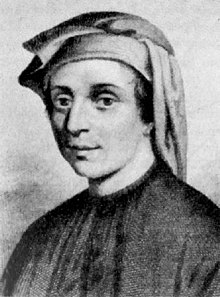
Leonardo Pisano Bigollo (known as Fibonacci) was an Italian mathematician best known to the modern world for the spreading of the Hindu–Arabic numeral system in Europe. Fibonacci was born around 1170 to Guglielmo Bonacci, a wealthy Italian merchant. As a young boy, Fibonacci traveled with him to help; it was there he learned about the Hindu–Arabic numeral system. Recognizing that arithmetic with Hindu–Arabic numerals is simpler and more efficient than with Roman numerals, Fibonacci travelled throughout the Mediterranean world to study under the leading Arab mathematicians of the time. Leonardo returned from his travels around 1200. In 1202, at the age of 32, he recorded what he had learned in Liber Abaci (Book of Abacus or Book of Calculation), and thereby popularized Hindu–Arabic numerals in Europe.
Fibonacci Sequence
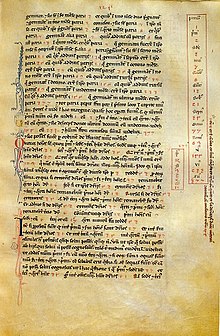
Liber
Abaci also posed, and solved, a problem involving the growth of a
population of rabbits based on idealized assumptions. The Solution known as
Fibonacci Number. The number sequence was known to Indian mathematicians
as early as the 6th century, but it was Fibonacci's Liber Abaci that
introduced it to the West. In the Fibonacci sequence of numbers, each
number is the sum of the previous two numbers.Fibonacci began the
sequence with 1,1, 2, etc. He carried the calculation up to the
thirteenth place (fourteenth in modern counting), that is 233, though another
manuscript carries it to the next place: 1, 1, 2, 3, 5, 8, 13, 21, 34, 55, 89,
144, 233, 377. Fibonacci did not speak about the golden ratio as
the limit of the ratio of consecutive numbers in this sequence.


